Look closely at how the floor is actually running. Calls get made one way today and another way tomorrow. One shift supervisor allows a workaround, and on the next shift it’s a different story. Conflict, miscommunication and disengaged teams are real, and they can explain some of what’s happening. But treating them as the source misses what’s driving them. The cause is often in how the floor is set up to run.
It doesn't have to stay that way.
Join our free 60-minute live session on November 4, 2026. Learn to read the floor, and see what's actually holding your operation back.
View Workshop Details →If you've invested in improvement and it isn't holding, one of these three situations probably explains why.
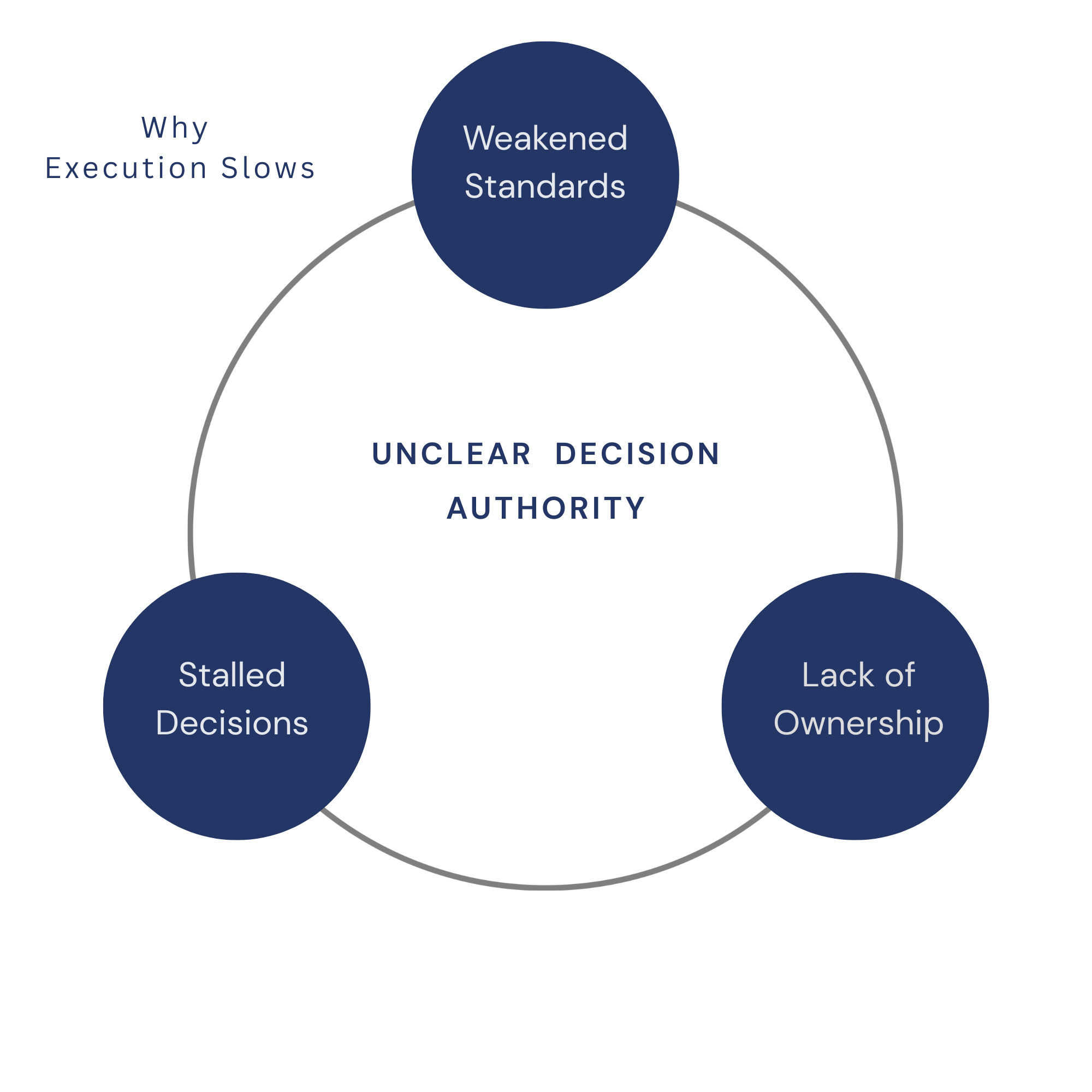
Decisions stall, re-open, or go upstairs — because decision authority was never made explicit.
Standards exist — but execution varies by shift, by manager, by who's asking.
Meetings produce agreement. The floor keeps running the way it always has.
What looks like a lack of follow-through, mixed signals, or blame shifting often points to a deeper operational problem. People aren’t clear on who owns the call. Different leaders respond differently to the same issue. Teams on the floor aren’t always sure who decides what. Once that pattern takes hold, the effects usually spread well beyond the original issue.
If you're a Lean or CI firm, or you're working alongside one, I work on the conditions that determine whether what you install actually sticks — decision authority, ownership on the floor, and leadership reinforcement. That's what makes the investment hold.
Start with Decision Clarity Resources →A single-page diagnostic tool for identifying where decision authority is unclear on your floor. Download it, use it in a team conversation, and see what it surfaces.
The Decision Clarity Card comes out of fifteen years of work on why execution breaks down in complex operating environments.
Use the Decision Clarity Resources →